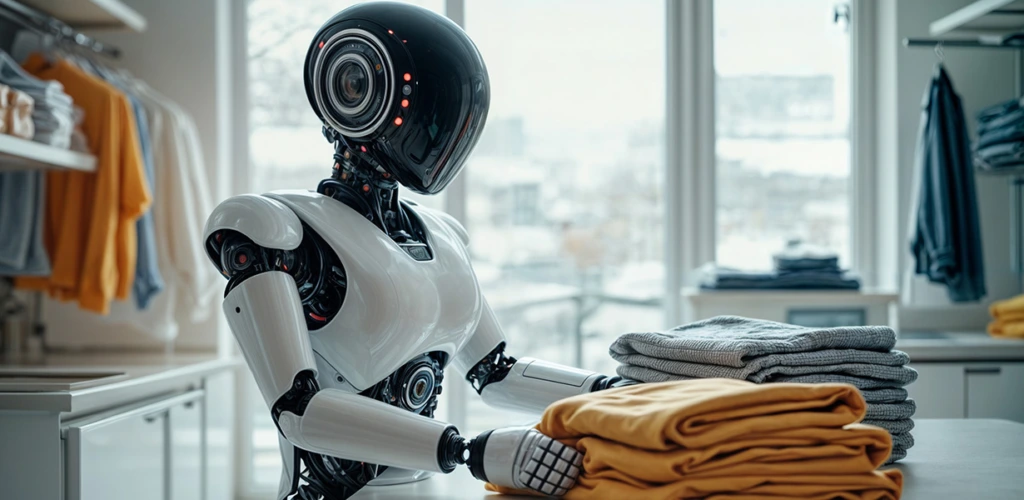
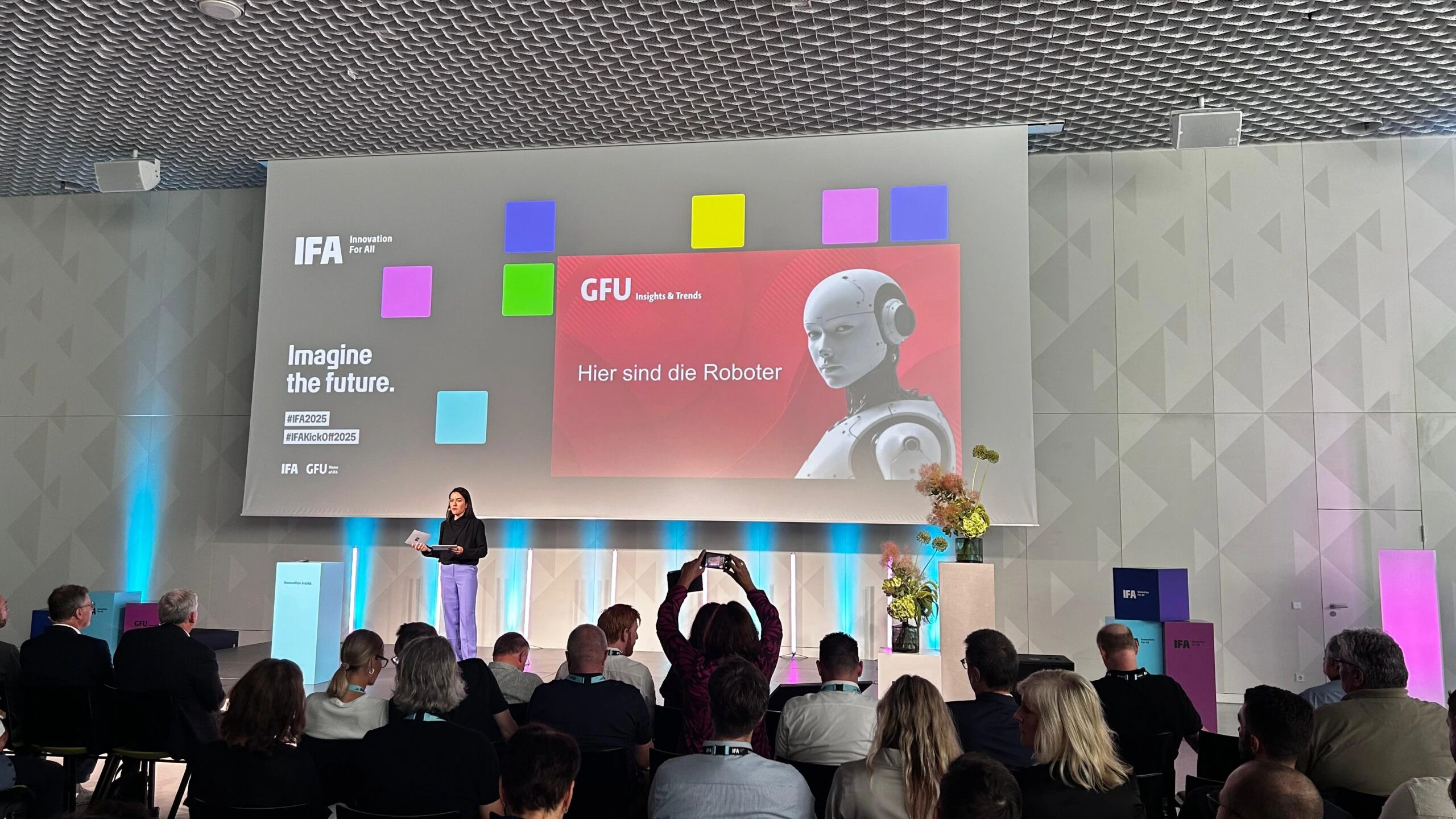
Whether robot vacuum cleaners, humanoid cooks, or automated care assistants: while 36 percent of people reject the idea of a robot crossing their threshold in the next five to ten years, 37 percent welcome these mechanical helpers. A further 26 percent are at least neutral toward them. A joint consumer survey of consumers by the industry organization GFU Home & Consumer Tech and the international strategy consultancy Oliver Wyman, a Marsh McLennan company, reveals strong polarization regarding the use of household robots in Germany.
The study “Here Come the Robots: Consumer Study on Robotics in the Home”, for which 1,300 people were surveyed, underscores the potential growth opportunities for the robotics market in Germany. Acceptance varies significantly depending on age, income, and gender: it is primarily younger people and those in middle age who would prefer to be supported by household robots. Among those over 55, however, skepticism rises markedly. Those who already spend money on cleaners, gardeners, caregivers, or babysitters are also particularly open-minded. This also confirms that approval increases with income: only 50 to 60 percent of people with an annual income below 30,000 euros can imagine robot support. Among respondents with an annual income of at least 80,000 euros, 70 to 80 percent are already open to the idea. Gender, by contrast, plays hardly any role in the question of acceptance. Only when it comes to babysitting are women significantly more reserved (20 percent approval) than men (36 percent approval).
“The key factor holding back the household robot market is price – and this obstacle will disappear: the cost of a humanoid robot will more than halve by 2035. The study shows that two-thirds of German consumers have recognized the benefits of household robots. In our view, the next commercially relevant breakthroughs will occur, for example, in areas such as skilled trades or gardening. In addition, further opportunities will emerge in the home”, reports Martin Schulte, Partner Retail and Consumer Goods at Oliver Wyman. At 61 percent, the second most common concern is becoming too dependent on technology and losing one’s own abilities as a result. 59 percent fear an intrusion into their privacy or express concerns regarding data protection.
“The results show that consumers in Germany think about robotics primarily in application-oriented and pragmatic terms. What matters are functional, reliable solutions that make everyday life tangibly easier – not futuristic visions. This opens up new potential especially for established European home appliance manufacturers, as they enjoy a particularly high level of trust. Promising opportunities in the robotics market are emerging for them”, summarizes Dr. Sara Warneke, Managing Director of GFU Consumer & Home Tech.