
Interviews & Talks
Interviews & Talks: 10. April 2025
Smart Home – The Home of the Future Thinks Ahead
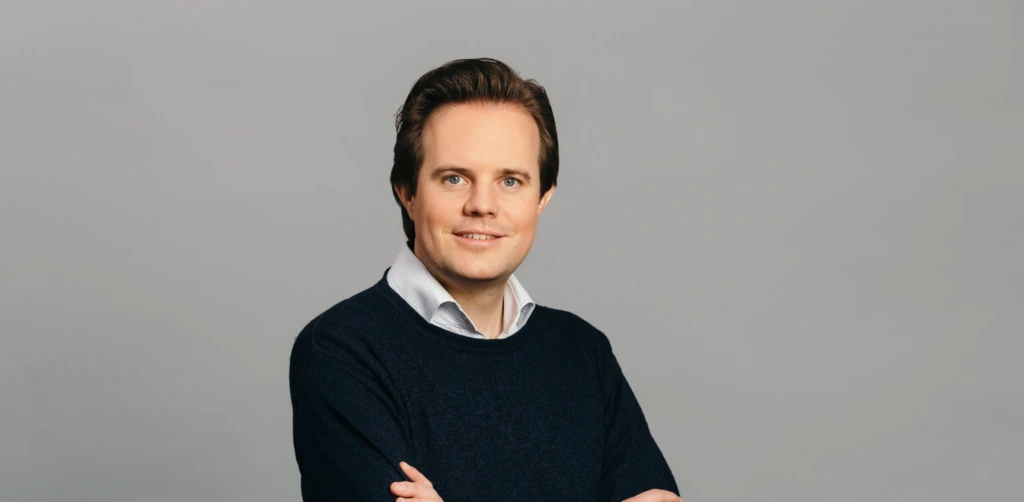
An interview with Christian Deilmann, co-founder and CPO of tado°
GFU: Christian – thank you very much for taking the time for this conversation. Smart, sustainable, efficient – that is what today’s home should be like for many consumers in Germany and beyond. Today I have the opportunity to discuss with you the challenges these needs pose for manufacturers as well as for your company tado°, and the opportunities they present.
How do you assess the acceptance and spread of smart home technologies in Germany compared with other countries?
Christian Deilmann: Germany is in the middle of the pack when it comes to the spread of smart home technology. In the area of smart thermostats, the Dutch are clearly ahead even on a global scale. More than 30% of all households in the Netherlands own and use smart thermostats. Ten years ago, that figure was still 0% – a rapid development. In England, penetration is likely to be a good 10% of households, and Germany is significantly below that. Acceptance is increasing at great speed. People are seeing ever greater benefits in connecting smart home products to their smartphones, and acceptance among consumers is rising continuously. Since the average consumer can reduce their annual heating costs by up to 22% by using smart technologies such as our thermostats, which corresponds to savings of several hundred euros per year – the spread of the category is progressing rapidly.
GFU: With your company, you are a pioneer in smart heating control. In your observation, how have consumers’ needs in this area changed in recent years?
Christian Deilmann: Fourteen years ago, we were the first to offer products for controlling heating and room temperatures with a smartphone. At that time, however, only 40% of the population in Germany had a smartphone. So we were clearly ahead of our time. In the first few years, it was essentially about explaining the fundamental benefits of connected thermostats and conveying their reliability. Today, consumers are increasingly asking for integrated solutions. In other words, they want an app that intelligently and orchestratedly controls all energy-related topics in the household. That means they want everything covered by one solution – in addition to heating, also the electric car, the PV system, the battery storage system and the electricity tariff or smart meter data[1]. With tado°, we are once again right at the forefront here and already offer our customers many of these services.
GFU: How can the smart home industry make use of artificial intelligence (AI) to optimize and reduce energy consumption?
Christian Deilmann: AI enables many product improvements and increases company productivity. In our control algorithms, we use these technologies to increase energy efficiency by automatically adapting them to the respective households and continuously learning along the way. Since we at tado° offer an hourly dynamic electricity tariff and purchase the electricity volumes for our customers as early as the previous day, a good demand forecast per customer is essential in order not to be left with excessive amounts of electricity. For these forecasts, we use AI models that are trained with many parameters – such as weekdays, weather forecasts and special events (e.g. holidays) – and are fed every five minutes. On the company side, ChatGPT has taken us significantly further in customer service, and I think we will find several more useful AI use cases in the company in the future.
GFU: What might the smart home market look like in the next five years, and what do you think will be the “game changer” for the industry in the next five to ten years?
Christian Deilmann: We are firmly convinced that in the future everyone will control their heating via mobile phone in order to benefit from greater energy efficiency. Every electric car, every PV system, every home storage system, etc. will also be viewable and controllable via smartphone. The game changer will be to simplify the solutions even further and increase reliability. The IoT standard “Matter/Thread”[2] will also help with this. In addition, clear and value-oriented end-customer communication will continue to be important in the future.
The interview with Christian Deilmann, co-founder and CPO of tado°, was conducted by Marie-Charlotte von Heyking of gfu Consumer & Home Electronics GmbH.
[1] Smart meter data is consumption data that is automatically recorded and transmitted by digital electricity, gas or water meters. It enables a detailed analysis of energy consumption and helps identify potential savings.
[2] Matter is a cross-manufacturer IoT standard that improves the compatibility and interoperability of smart home devices. Thread is a wireless network protocol developed specifically for smart home applications and enables reliable, low-power and secure communication between devices. Together, Matter and Thread ensure seamless networking of different smart home products.